Pool Filter Replacement: Types, Costs, and When to Pull the Trigger
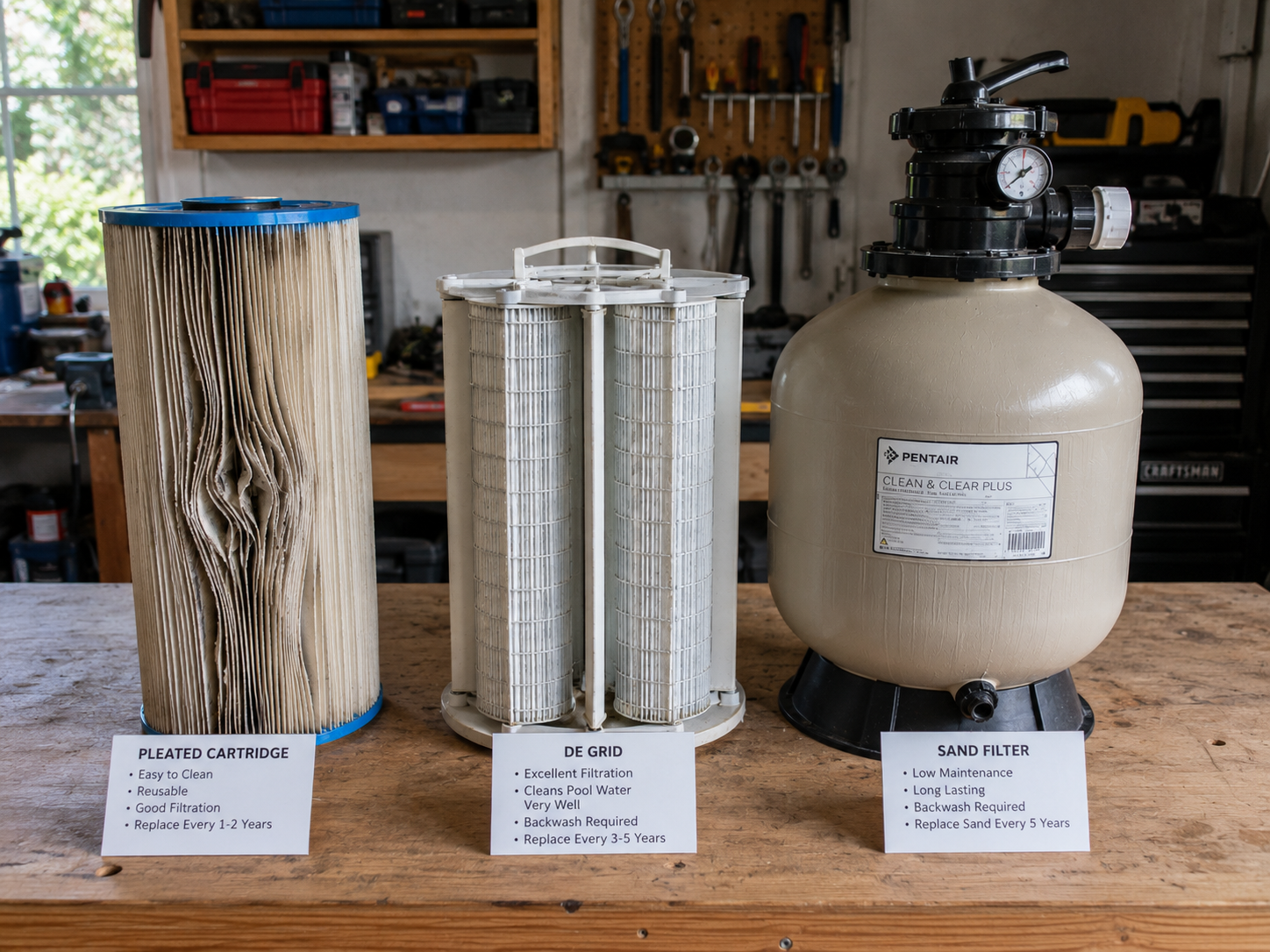
Quick Answer: Replace pool filter cartridges every 1 to 2 years, DE grids every 3 to 5 years, and sand every 5 to 7 years. Signs you need a replacement sooner: high filter pressure that won't drop after backwashing, cloudy water that won't clear, or visible damage to the filter media.
A pool filter does one job: remove what doesn't belong in your water. When it stops doing that job well, no amount of chemicals will keep the water clear. The fix is usually simpler than people think.
The Three Types of Pool Filters
Cartridge, DE (diatomaceous earth), and sand filters all work — they just work differently, and they fail differently.
Cartridge Filters
The most popular type for residential pools right now. The cartridge is a pleated polyester filter element that traps particles as water passes through. Rinse it every 2 to 4 weeks, deep clean it every 3 to 6 months. Replace the cartridge itself every 1 to 2 years.
Signs it's time: you're cleaning it more often, pressure stays high even after cleaning, or you can see tears or deformed pleats on the cartridge.
DE Filters
DE filters use a fine powder made from fossilized algae to coat grid elements inside the tank. They filter down to 3 to 5 microns — finer than cartridge or sand. They need to be backwashed and recharged with DE powder after each backwash. The grids inside last 3 to 5 years before needing replacement.
Signs the grids need replacing: DE powder blowing back into the pool, difficulty holding pressure, or visible tears on the grids during inspection.
Sand Filters
The simplest system. Water passes through a tank of filter sand, which traps debris. Backwash when pressure reads 8 to 10 psi above normal. Sand lasts 5 to 7 years — longer if you're keeping up with maintenance.
Signs the sand needs replacing: backwashing more frequently than before, water stays cloudy despite good chemistry, or you're finding sand in the pool (which means the laterals inside are cracked).
Pool Filter Replacement Costs
Here's a rough breakdown of what filter replacement runs:
- Cartridge replacement (DIY): $30 to $150 depending on size and brand
- Cartridge replacement (installed): $100 to $300
- DE grid set replacement (installed): $200 to $500
- Sand replacement (installed): $300 to $600
- Full filter system replacement: $500 to $1,500+ depending on type and pool size
Can You Replace a Pool Filter Yourself?
Cartridge replacement is the most DIY-friendly — shut off the pump, open the filter housing, swap the cartridge, reassemble. Most homeowners handle this without issue.
DE grid replacement and sand replacement require more disassembly and are easier to mess up. If you've never done it before, a one-time professional service is worth it to see how it's done correctly. Putting a DE filter back together wrong leads to DE powder in the pool and a filter that bypasses water.
When to Replace the Whole Filter
If the tank itself is cracked, the pressure gauge is stuck, or the multiport valve is failing, the cost of repairs often approaches the cost of a new unit. Filter tanks typically last 10 to 15 years. If yours is getting close to that range and having problems, a new system is usually the smarter call.
Frequently Asked Questions
Q: What are the best pool filter types to buy?
For most Florida residential pools, a cartridge filter is the easiest to maintain. DE gives you the cleanest water but requires more work. Sand is the lowest maintenance but also the least precise filtration. The right choice depends on your pool size, how often you want to maintain it, and your budget.
Q: Why timely pool filter replacement is essential for clean water
A degraded filter doesn't just mean cloudy water — it means your pump is working harder to push water through restricted media, which shortens pump life. Algae and bacteria that should be filtered out stay in circulation. It's a compound problem that gets more expensive the longer you wait.
Q: How do I choose the right pool filter replacement parts?
Match the model number on your existing filter. Cartridges are model-specific — the wrong size won't seal properly. For DE grids, confirm the number of grids and the tank manufacturer. When in doubt, bring the old part to your pool supply store or call us — we can look it up by the filter tank label.
Q: Can I replace the pool filter myself or should I hire a professional?
Cartridge swaps — yes, DIY is fine. Sand and DE grid replacements are doable but more involved. Full system replacement requires proper plumbing connections and a correctly sized filter for your pool volume, which is worth having a professional handle to avoid undersizing the new unit.