Signs You Should Winterize Your Pool Now
Quick Answer: If temps are consistently dropping below 65°F, algae has stopped growing, and you're using the pool less than once a week — it's time. Waiting too long risks freeze damage to your pipes, pump, and filter.
Most pool owners wait too long. They figure they'll squeeze in one more swim, one more weekend — and then November hits and they're scrambling. Closing a pool the right way takes a few hours. Fixing freeze damage takes a few thousand dollars.
Here's how to tell you're past the "wait and see" stage.
Water Temps Drop Below 65°F
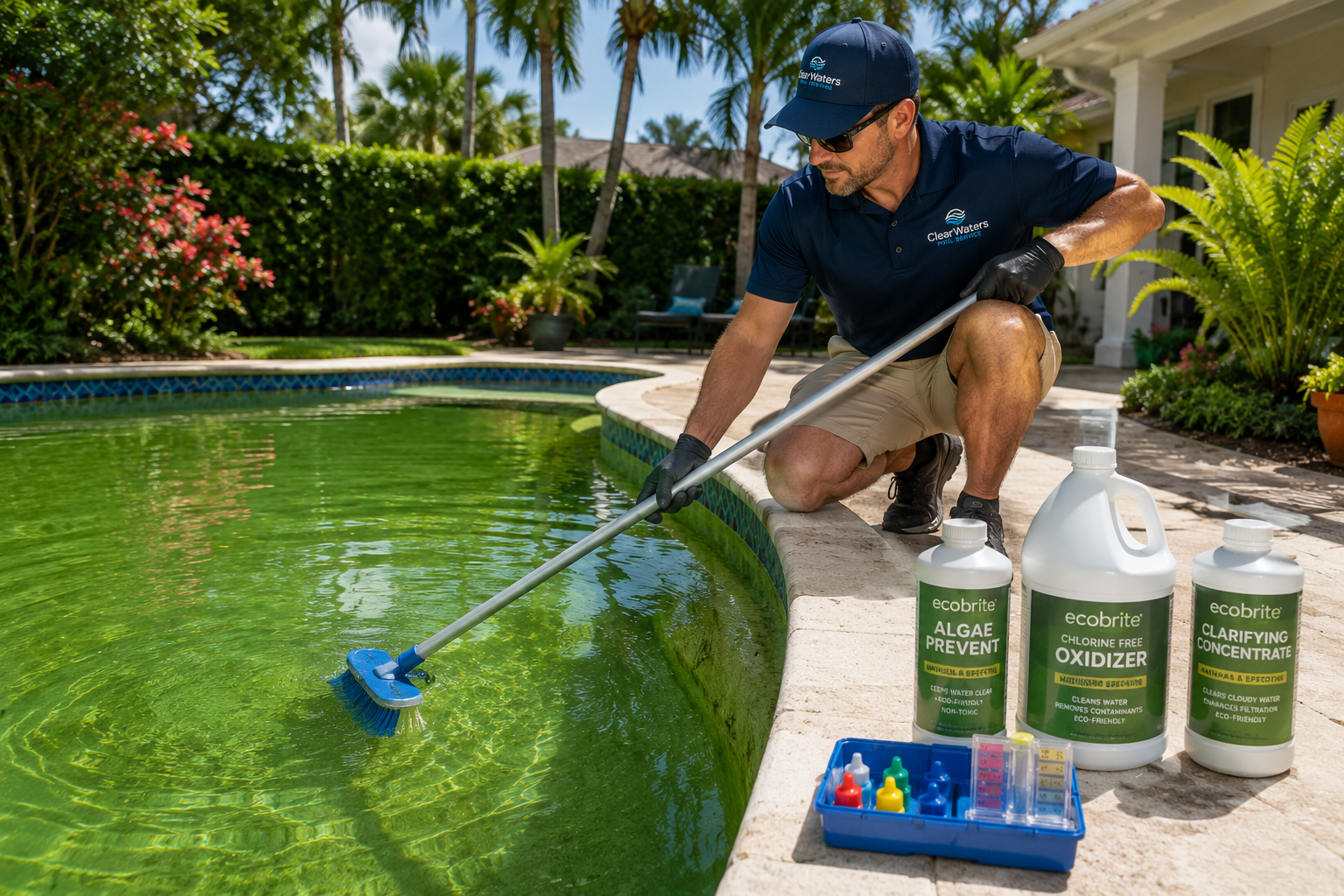
This is the most reliable signal. Once the water stays below 65°F, algae growth slows to almost nothing. That matters because the whole point of your chemicals is to fight algae. When algae stops being a threat, you're basically paying to maintain a pool you're not using.
Pick up a basic pool thermometer and check in the morning. Three days in a row under 65? Time to start the winterization process.
You Haven't Swum in Two Weeks
Be honest. If the cover's been on longer than it's been off, the pool is already in off-season mode — your wallet just hasn't caught up yet. Chemical costs, electricity for the pump, routine checks — it adds up fast when you're not using it.
Leaves Are Dropping Faster Than You Can Skim
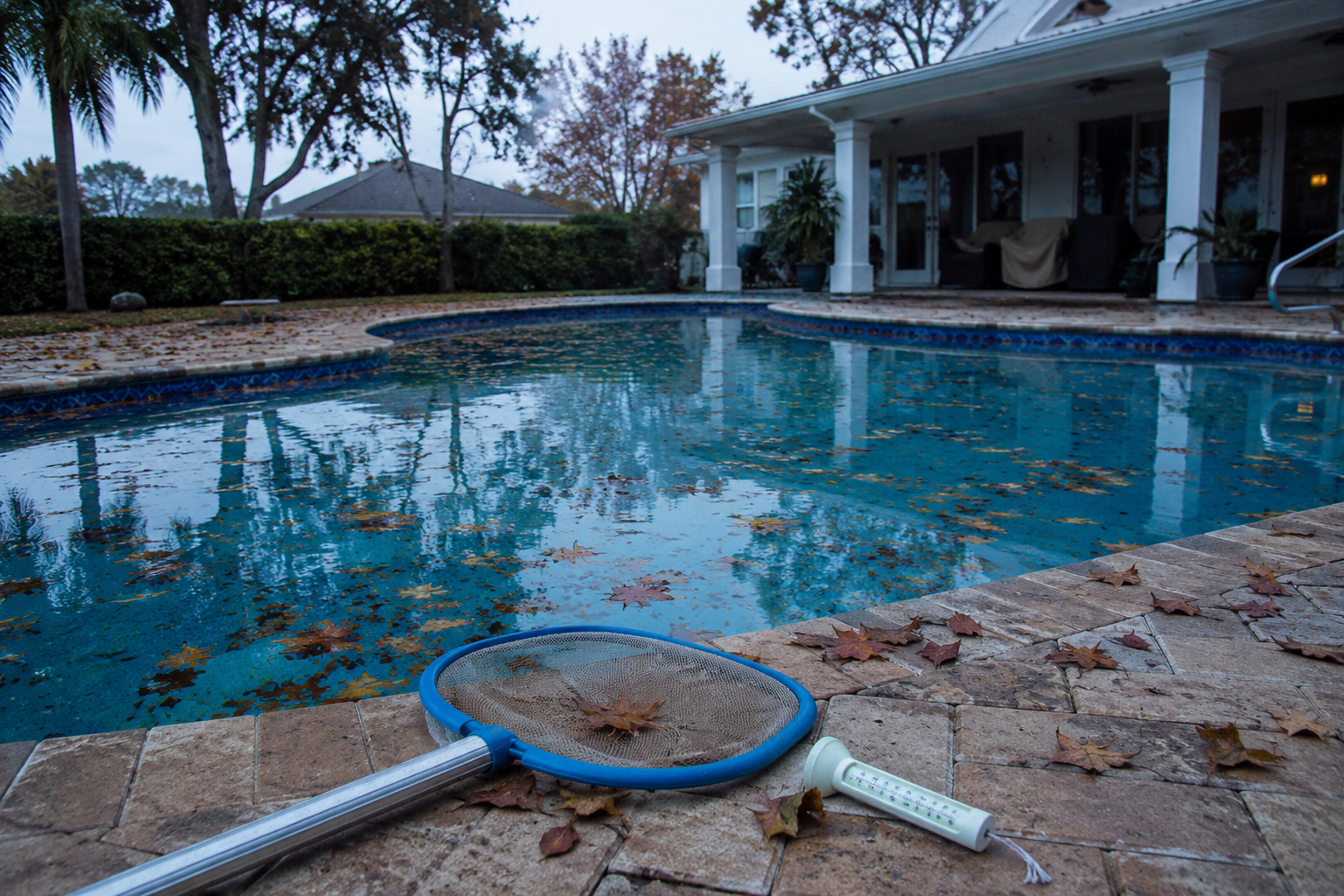
Fall debris is a major headache for open pools. Leaves break down, release tannins, and stain the plaster. Your filter works overtime. Algae gets a head start on organic material sitting on the bottom.
If you're spending more time with the skimmer than you'd like, closing is the smarter move.
Freeze Warnings Are in the Forecast
Florida doesn't get hard freezes often, but when it does, water sitting in exposed pipes and equipment can crack lines. One overnight freeze on an unprotected pool can damage your pump housing, filter tank, or heater exchanger.
Don't gamble on the forecast. If temps are dropping into the 30s, close the pool or at least run your pump overnight — and call us if you need help fast.
Your Chemical Balance Has Been Off for Weeks
If you've been fighting cloudy water, persistent algae blooms, or pH that won't hold — and you're not using the pool much — winterizing with a fresh chemical balance is often the easier fix. A proper winterization treatment keeps the water stable for months without daily management.
Frequently Asked Questions
Q: What happens if I don't winterize my pool?
Skipping winterization can lead to algae blooms that are expensive to treat, scale buildup on surfaces, and in colder climates, freeze damage to plumbing and equipment. Even in Florida, leaving pool chemistry unbalanced through the off-season leads to staining, cloudy water, and a harder opening in spring.
Q: Can I winterize my own pool or should I hire a professional?
You can do a basic DIY close — lower water level, add winterizing chemicals, cover the pool. But if you have a heater, automation system, or in-floor cleaning system, professional winterization is worth it. One mistake on a $3,000 heater is a lot more expensive than a service call.
Q: How long does pool winterization take?
A professional winterization typically takes 1 to 2 hours depending on the pool size and equipment setup. DIY takes longer your first time — budget 3 to 4 hours.
Q: When should I open my pool again in the spring?
Aim for when water temps are consistently back above 65°F. In Florida, that's often February or March depending on the region. Opening too early wastes chemicals. Opening too late gives algae a head start.