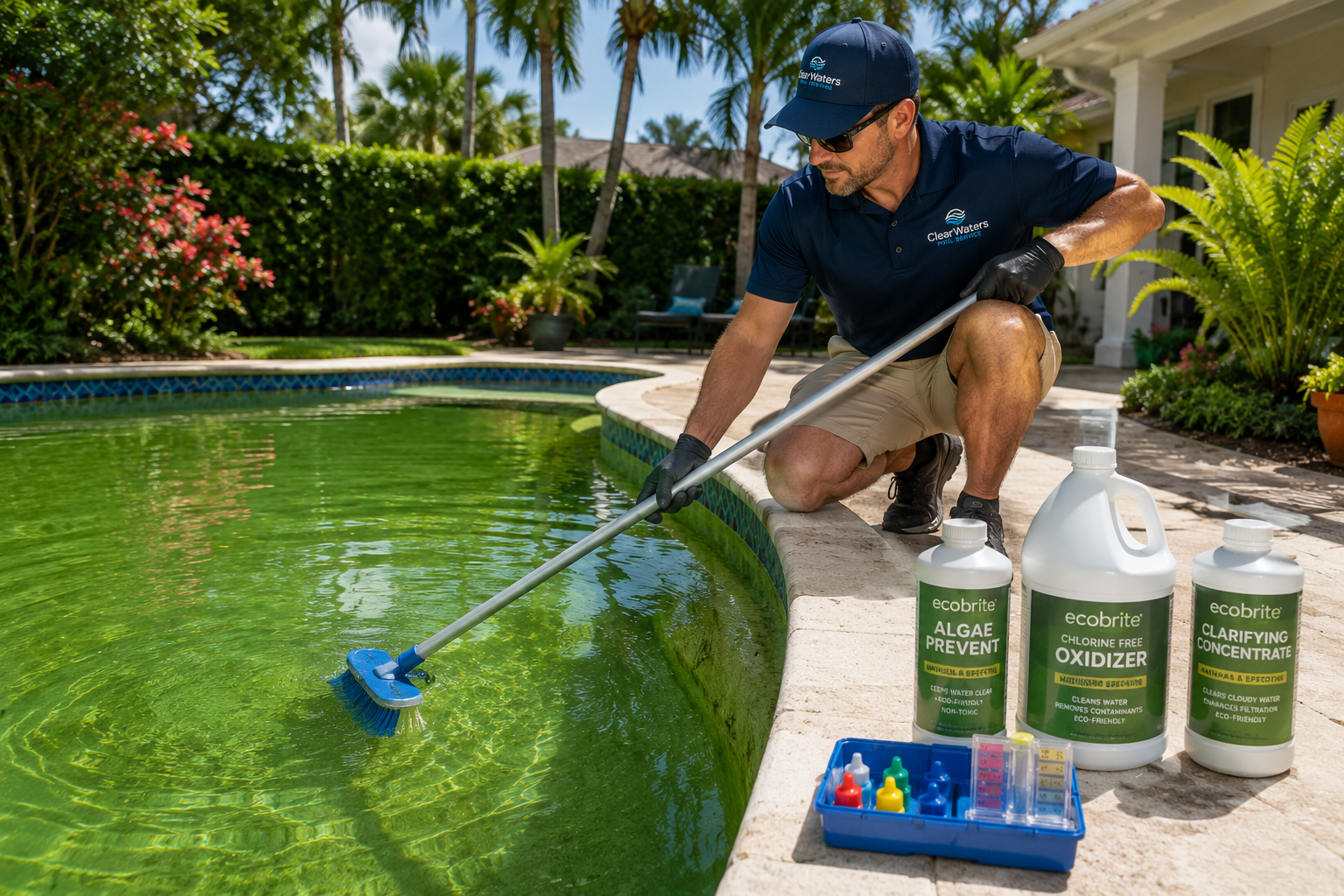
Understanding Algae Treatment Systems for Clear Pools
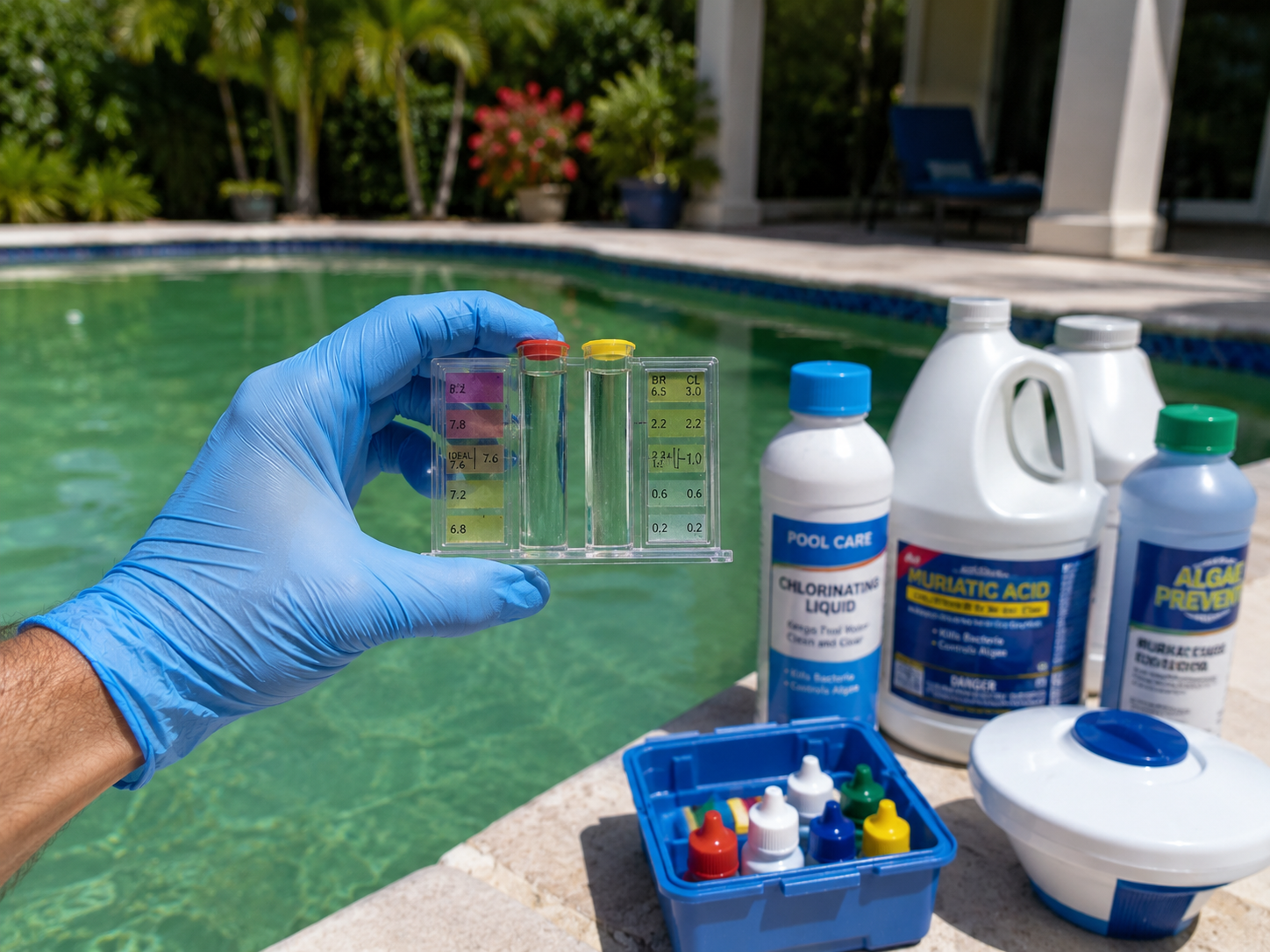
Quick Answer: The most effective algae treatment systems combine a good sanitizer (chlorine or saltwater), a supplemental algaecide, and proper circulation. Copper-based ionizers and UV systems work well as backups — but none of them replace regular brushing and water testing.
Green water is one of the most common pool problems we see — and one of the most preventable. The fix depends on understanding what you're actually fighting.
Algae needs three things: warmth, nutrients, and standing water. Florida gives it all three in abundance from April through October. A good algae management system takes at least one of those away.
Chlorine: Still the Most Effective Front Line
Free chlorine between 1 and 3 ppm kills most algae strains before they get a foothold. The problem is consistency. Heat, UV from the sun, and swimmer load burn through chlorine fast in summer. If you're testing twice a week and still seeing algae, you're probably not maintaining residual chlorine long enough between checks.
A saltwater chlorinator helps here. It generates chlorine continuously from salt in the water, keeping levels more stable than manually dosing.
Algaecide as a Supplement — Not a Replacement
Algaecide doesn't work well on its own. It's a preventive tool, not a cure. Add it weekly or after heavy rain. Quaternary ammonium algaecides (quats) are the most common. Copper-based algaecides are stronger but can stain pool surfaces if your pH isn't balanced first.
UV Systems and Mineral Ionizers
UV sanitizers install in the return line and blast passing water with ultraviolet light, killing algae and bacteria without adding chemicals. They don't eliminate the need for chlorine — you still need a residual — but they let you run lower chlorine levels. Some customers with sensitive skin appreciate this.
Copper-silver ionizers work similarly. They release trace amounts of copper (algaecide) and silver (bactericide) into the water. The EPA-recognized Carefree Clearwater and similar systems are legitimate supplemental tools. The limitation: they still require chlorine backup, and copper levels need monitoring to avoid staining.
The System That Works in Florida
For most residential pools here, the combination that holds up is: saltwater chlorination or a reliable dosing schedule, weekly algaecide, and a variable-speed pump running at least 8 to 10 hours per day. Circulation is underrated — stagnant water is where algae wins.
Frequently Asked Questions
Q: How does AquaJet's algae treatment compare to others in effectiveness and cost?
We use a combination approach: balance the chemistry first, then shock treatment, then follow-up algaecide. We don't sell a single product as a magic fix because that's not how algae works. Pricing depends on the severity — a mild green pool is different from a fully black-algae situation, which can take multiple treatments.
Q: How long does it take to clear a green pool?
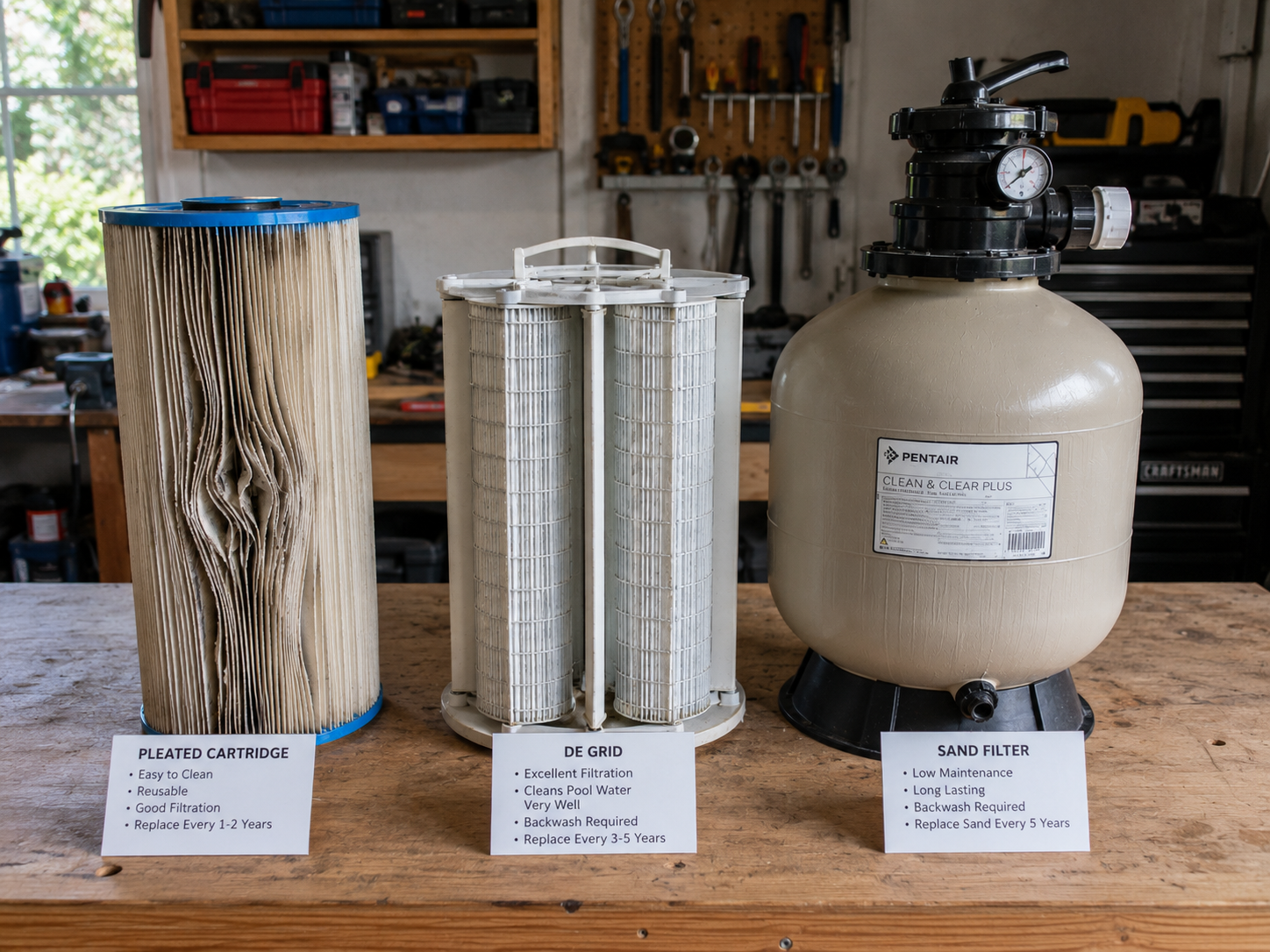
Mild algae blooms usually clear in 24 to 48 hours after proper shock treatment and filtering. Heavy green or black algae can take 3 to 7 days with repeated treatment, brushing, and filter cleaning. The filter is doing a lot of work during this process — backwash or clean it daily.
Q: Can I prevent algae without using a lot of chemicals?
Yes. Good circulation, a variable-speed pump, a UV system, and consistent water testing can reduce your chemical use significantly. Keeping phosphate levels low also helps — algae feeds on phosphates from leaves and debris.